
What Does "Technology" Really Mean in 2026?
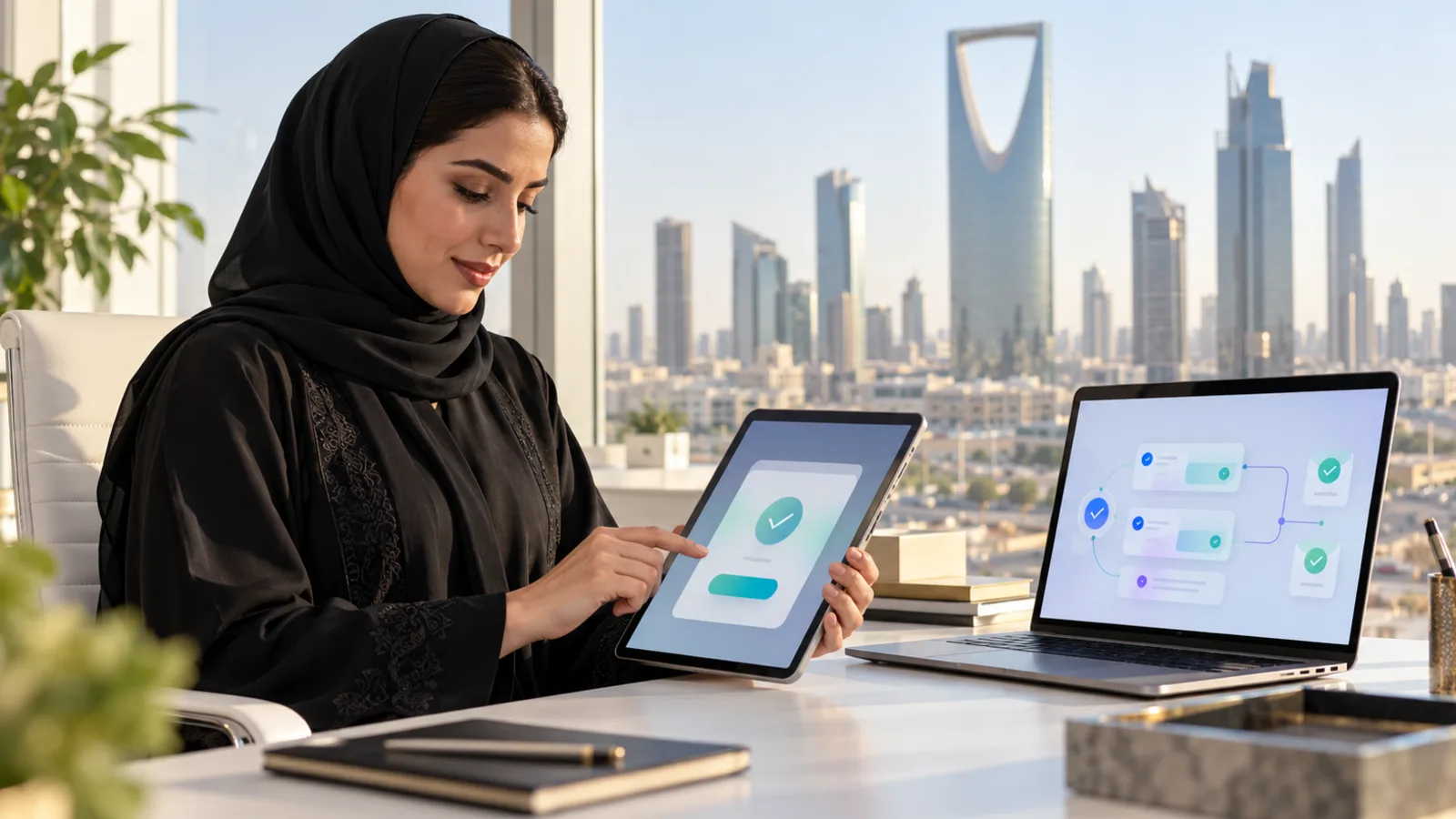
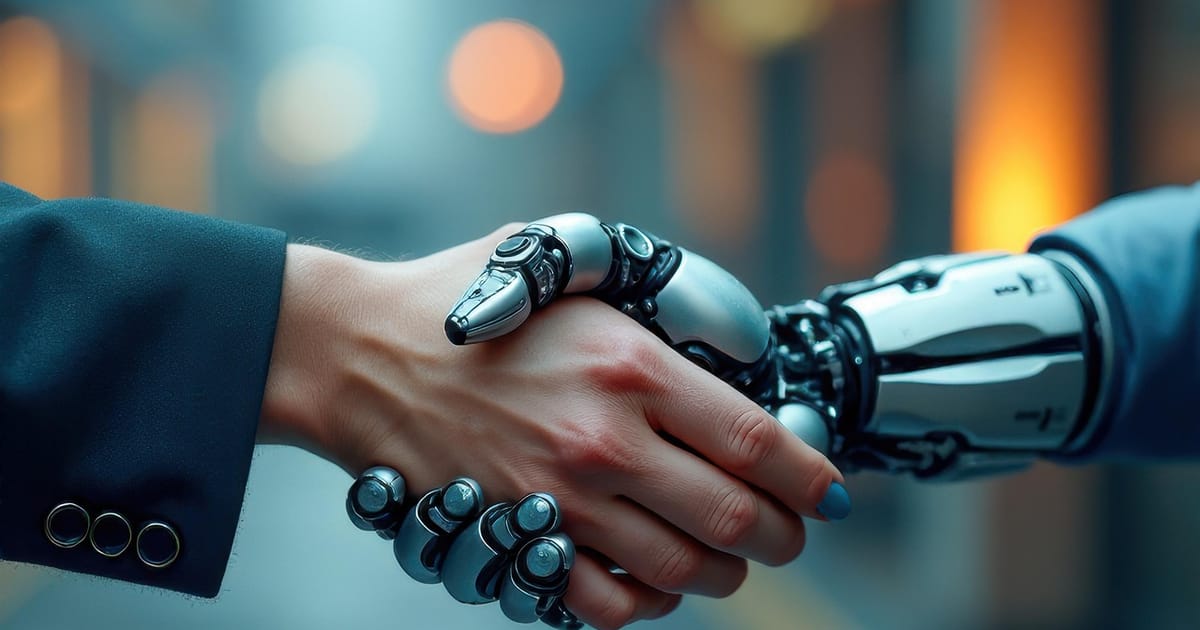
The word "Technology" — from the Greek tekhnologia (τεχνολογία), meaning "systematic treatment of an art or craft" — has evolved dramatically through the centuries. From the printing press to the internet, each era redefined what technology means to humanity. But in 2026, a Saudi Arabian company is writing the next chapter of this definition — one that places intelligent collaboration between humans and AI at its very core.
This isn't about building faster processors or bigger data centers. This is about creating a living, breathing ecosystem where every user carries their own AI intelligence, where AI assistants learn from each other through Knowledge Circles, and where privacy isn't sacrificed for personalization — it's enhanced by it.
The Evolution of "Technology" Through the Ages
To understand why 2026 marks a turning point, we must trace the word's journey:
- 1st Industrial Revolution (1760-1840) — Technology meant mechanization. Steam engines replaced manual labor.
- 2nd Industrial Revolution (1870-1914) — Technology meant electrification. Factories, railways, and telegraphs connected the world.
- 3rd Industrial Revolution (1960-2000) — Technology meant digitization. Computers and the internet transformed information flow.
- 4th Industrial Revolution (2010-2025) — Technology meant automation. AI, cloud computing, and smartphones became ubiquitous.
- 5th Paradigm (2026+) — Technology now means personalized collective intelligence. Every individual has their own AI that participates in a global knowledge ecosystem.
It is this fifth paradigm that a Saudi company has pioneered — and it changes everything.
The Saudi Breakthrough: Smart Assistants Ecosystem
At the heart of this revolution is a Smart Assistants Marketplace — a platform where specialized AI assistants serve different business and personal needs. But unlike conventional AI platforms where models run exclusively on remote servers, this system introduces a fundamentally different architecture:
Three-Layer Intelligence Architecture
- Cloud Layer — Large foundation models handle complex reasoning, data analysis, and multi-step workflows. These are the "scientists" of the ecosystem.
- Edge Layer (On-Device) — Small, optimized AI models (under 3GB) run directly on users' smartphones. These are the "personal advisors" — they know you, your preferences, and your history.
- Circle Layer (Federated) — Knowledge Circles connect edge models, allowing them to share learning without sharing data. This is the "collective wisdom" layer.
Personal AI Models: Your Intelligence, Your Device
The concept of a Personal AI Model represents perhaps the most significant shift in how humans interact with technology since the smartphone itself.
How It Works
When a user activates this feature, a small language model is downloaded to their device. Over time, this model:
- Learns communication patterns — How you phrase questions, what topics matter to you, your decision-making style.
- Builds a preference graph — A private, on-device knowledge base of your interests, priorities, and interaction history.
- Provides instant responses — Common queries are answered locally in milliseconds, without any server round-trip.
- Filters and prioritizes — Incoming notifications, recommendations, and content are pre-processed by YOUR model before reaching you, ensuring relevance.
Why This Matters for Privacy
In the traditional AI model, your data travels to a server, gets processed, and insights are generated remotely. You have no control over what happens to your data after it leaves your device.
With on-device personal AI:
- Your data never leaves your phone unless you explicitly choose to share.
- Your model learns from your behavior locally — no cloud processing needed for personalization.
- You can delete your model at any time, and all learned patterns are instantly erased.
- Even when participating in Knowledge Circles, only anonymized, aggregated patterns are shared — never raw personal data.
Knowledge Circles: Where AI Assistants Teach Each Other
This is the innovation that has captured the attention of global AI researchers. Knowledge Circles are collaborative learning networks where AI assistants improve each other through shared experience — without compromising any individual's privacy.
The Architecture of a Knowledge Circle
Each Knowledge Circle operates on three principles:
- Domain Specificity — Circles form around specific topics: "Saudi Real Estate", "E-Commerce Logistics", "Legal Compliance", "Automotive Market". This ensures relevant, focused learning.
- Federated Learning Protocol — Instead of sharing data, models share gradient updates — mathematical representations of what they've learned, stripped of any identifying information.
- Merit-Based Contribution — Assistants that provide more valuable insights earn higher trust scores, creating a self-regulating quality control mechanism.
A Practical Example
Imagine a user in Riyadh asks their personal AI assistant: "What's the fair market price for a 2024 Toyota Camry with 30,000 km?" The assistant provides an answer based on its local knowledge. When the user confirms a successful transaction at that price, the assistant's learned pricing model is anonymously contributed to the "Automotive Market" Knowledge Circle.
Now, thousands of similar micro-learnings from across Saudi Arabia flow into this circle. The result? Every assistant connected to this circle becomes progressively better at pricing predictions — a collective intelligence that no single model could achieve alone.
Why Saudi Arabia Leads This Revolution
Several factors make Saudi Arabia the natural birthplace of this technology:
- Vision 2030 Digital Infrastructure — Massive investments in 5G, data centers, and digital identity systems provide the foundation for edge computing and federated learning.
- Young, Tech-Savvy Population — With over 70% of the population under 35 and smartphone penetration exceeding 98%, Saudi Arabia has the ideal user base for on-device AI.
- Privacy-Conscious Culture — Saudi society places high value on personal privacy, making the on-device, privacy-first approach deeply resonant with local values.
- Rapid Digital Economy Growth — The explosion of e-commerce, fintech, and digital services creates massive demand for intelligent, personalized AI assistants.
The AI Arsenal: World-Class Models Powering Our Vision
Building a system of this magnitude requires leveraging the most powerful AI models on the planet. Our development strategy employs a multi-model orchestration approach — using each model where it excels best:
Development & Core Intelligence
- Claude (Anthropic) — Utilized for complex reasoning, code architecture, and safety-critical decision making. Claude's exceptional ability to follow nuanced instructions makes it the backbone of our assistant behavior engineering and ethical AI guidelines.
- Gemini (Google DeepMind) — Powers our multi-modal understanding capabilities. Gemini's native ability to process text, images, video, and code simultaneously enables our assistants to handle rich media interactions within classified ads and marketplace conversations.
- Grok (xAI) — Deployed for real-time data analysis and trend detection. Grok's access to live information streams helps our Knowledge Circles stay updated with market movements, pricing fluctuations, and emerging consumer patterns across Saudi Arabia.
- OpenAI (GPT Series) — Integrated for natural language generation and conversation quality. OpenAI's models ensure our assistants produce human-quality text in both Arabic and English, with cultural sensitivity and contextual awareness.
The Cost-Production Equation: Qwen's Strategic Role
Here's where our strategy truly differentiates: while Western models excel in raw capability, the Chinese Qwen models (by Alibaba Cloud) solve the most challenging equation in AI deployment — the balance between cost and production volume.
- Edge Deployment — Qwen's smaller variants (Qwen-1.5B, Qwen-7B) are optimized for on-device execution, making them ideal candidates for our Personal AI Models. They deliver impressive performance while consuming minimal phone resources.
- Cost Efficiency — For routine tasks (category classification, basic Q&A, price estimation), Qwen models cost a fraction of their Western counterparts while maintaining sufficient quality. This allows us to process millions of daily interactions without prohibitive costs.
- Arabic Language Support — Qwen models have demonstrated strong multilingual capabilities, including Arabic, making them particularly effective for our Saudi-focused marketplace.
- Knowledge Circle Processing — The federated learning computations within Knowledge Circles require massive parallel processing. Qwen's favorable cost-to-performance ratio makes it economically viable to run these computations at scale.
The Multi-Model Philosophy
Our approach isn't about choosing one model over another — it's about intelligent orchestration. A single user interaction might involve:
- Qwen on the user's phone for instant, private pre-processing
- Claude for complex reasoning when the query requires deep analysis
- Gemini for understanding product images shared in chat
- Grok for real-time market pricing data
- OpenAI for crafting the final, polished response in Arabic or English
This multi-model architecture achieves what no single AI provider could deliver alone: maximum intelligence at sustainable cost, enabling us to serve millions of users while maintaining quality that rivals — and often surpasses — any single-model approach.
The Future of Technology Starts Here
When we say "technology" in 2026, we no longer mean just devices and software. We mean intelligent ecosystems where every user is an active participant in a global AI knowledge network. Where your phone doesn't just connect you to the internet — it gives you your own AI intelligence that learns, adapts, and collaborates with millions of other AI models to create something greater than the sum of its parts.
This is the new meaning of technology. And it was pioneered by a Saudi company that dared to reimagine what's possible.